
Jul 12th 2026
Resources
- Facebook Ads for Amazon [Video Course]
- Drive Traffic To Amazon [Ultimate Guide]
- Get More Amazon Reviews [Ultimate Guide]

TL;DR
What are the primary differences between Amazon’s three main campaign bidding strategies?
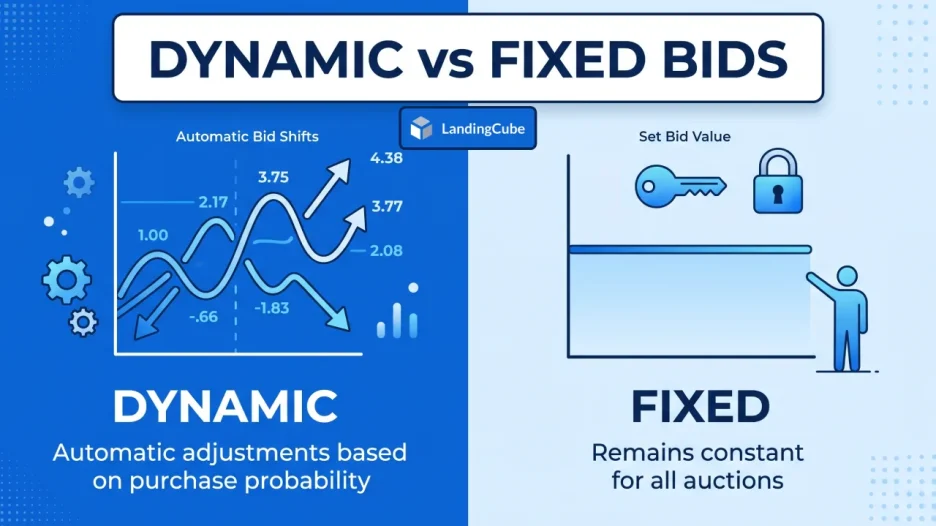
Amazon provides three distinct options: Dynamic Bids – Down Only (reduces your bid if a sale is unlikely), Dynamic Bids – Up and Down (adjusts your bid both upward and downward based on conversion probability), and Fixed Bids (maintains the exact same bid regardless of shopper intent signals).
Why is “Dynamic Bids – Down Only” recommended as the foundational strategy for a new product launch?
It functions as a financial shield because your base bid serves as a strict ceiling. Amazon is permitted to lower your bid to protect you from low-converting traffic, but it will never raise it above the maximum limit you set, keeping the learning phase highly affordable.
What makes “Dynamic Bids – Up and Down” dangerous for brand-new ad campaigns?
New campaigns lack historical conversion data, forcing the algorithm to make expensive guesses. Because this setting permits Amazon to double your base bid (up to a 100% increase for top-of-search placements), it can rapidly deplete budgets on unproven keywords.
When does utilizing “Fixed Bids” offer a distinct tactical advantage over dynamic options?
Fixed Bids are highly effective for brand defense campaigns to stop competitors from intercepting your traffic, or during short-term, aggressive product launches where maximizing raw visibility is prioritized over immediate profitability.
Your first Amazon ad campaign can get confusing fast. The moment you open the Advertising Console, Amazon starts asking you to make decisions about settings you may never have seen before. For many new sellers in the United States, the natural instinct is to rush through the setup, enter a few keywords, choose a random daily budget, and launch the campaign just to get it live.
Table of Contents
- The Foundation: Understanding the Amazon Auction
- Strategy 1: Dynamic Bids – Down Only (The Shield)
- Strategy 2: Dynamic Bids – Up and Down (The Aggressive Multiplier)
- Strategy 3: Fixed Bids (The Absolute Control)
- The Compounding Danger: Bidding Strategies and Placement Modifiers
- The Strategic Playbook: When to Use Which Strategy
- Moving Forward with Confidence
- FAQ: The difference between Amazon Dynamic Ads and Fixed Bids
However, one setting in the middle of the campaign setup page can have a major impact on whether your advertising effort becomes profitable or drains your budget. This is the Campaign Bidding Strategy module. To get more from your ad spend, you also need to combine the right bidding approach with reliable Amazon SEO Tools that help improve your listing’s visibility and conversion potential.
Amazon gives you three choices: Dynamic Bids – Down Only; Dynamic Bids – Up and Down; and Fixed Bids. These may look like simple settings, but each one changes how much Amazon is allowed to bid on your behalf. If you accept the default option without understanding the math behind it, you are giving Amazon’s machine-learning system more control over your advertising budget than you may realize.
In a competitive marketplace where cost-per-click rates continue to rise, guessing is no longer a safe strategy. The difference between a profitable product launch and a campaign that burns through thousands of dollars in ad spend often comes down to understanding how Amazon adjusts your bids in real time.
In this guide, we will break down how Amazon’s bidding strategies work in plain language. We will look at the differences between dynamic and fixed bidding, explain the financial risks of compounding multipliers, and show when each strategy makes sense for a new seller trying to improve return on investment.
The Foundation: Understanding the Amazon Auction
A bid is not the amount Amazon automatically charges you. It is the limit you are willing to put on the table when your ad competes for a placement. That distinction matters because the number you enter and the amount you eventually pay are often different.
Imagine that your maximum bid is $2 and another seller competing for the same shopper is willing to pay $1. If Amazon gives you the placement, the click may cost roughly $1.01 rather than the full $2. The extra dollar gave you room to compete, but Amazon did not necessarily need to use all of it.
This makes large bids seem safer than they really are. New sellers sometimes assume Amazon will always lower the final cost enough to protect them, so they enter aggressive bids without thinking through the risk.
The base bid is not always the final number Amazon uses. With dynamic bidding turned on, Amazon may adjust it before entering the auction based on how likely the shopper is to purchase. Understanding the Amazon marketing funnel also helps explain why shoppers at different stages of the buying journey should not always be treated the same.
Strategy 1: Dynamic Bids – Down Only (The Shield)
If there is one bidding rule new Amazon sellers should remember, it is this: start with Dynamic Bids – Down Only. This is the safest option when you are still learning which keywords, placements, and shoppers are most likely to convert.
When you choose this setting, your base bid acts as a ceiling. If you set a maximum keyword bid of $2, Amazon can lower that amount, but it will not raise it above the limit you entered. That gives you more control over how much a single click can cost.
The useful part is what Amazon does behind the scenes. The platform has a huge amount of shopper data, including browsing behavior, purchase history, and the time of day someone is searching. Amazon uses those signals to estimate whether a click is likely to lead to a sale.
If the system thinks a shopper is unlikely to convert, it may reduce your bid for that auction. Your $2 bid might fall to $0.50 before the ad competes for the placement. If you still win, you get the click at a lower cost. If you lose, Amazon has likely saved your budget from traffic it believed had weak purchase intent.
That is why Down Only works so well for new campaigns. It gives Amazon room to protect you from weaker auctions without allowing the system to push your bids higher. While you are still collecting data and learning your true conversion rates, that extra layer of protection can keep your daily budget from disappearing too quickly.
Protecting your internal ad spend also gives you more room to explore how to drive external traffic to Amazon without draining the budget that supports your core campaigns. The goal is not to avoid every low-converting click, but to keep the learning phase affordable enough that you can gather useful data. If you begin bringing in outside visitors, Amazon Attribution can help you measure which traffic sources are actually contributing to sales.
Once you know which channels are working, learning how to increase traffic to your Amazon listing becomes much easier because you can focus on the sources that bring in qualified shoppers.
Strategy 2: Dynamic Bids – Up and Down (The Aggressive Multiplier)
Dynamic Bids – Up and Down is much more aggressive. Amazon can lower your bid when it expects a weak conversion, but it can also raise the bid when the system believes a shopper is more likely to buy.
That flexibility can be useful, but it creates more risk. For top-of-search placements, Amazon may increase your bid by as much as 100%. For other placements, the increase may reach 50%.
Imagine setting a base bid of $3 for a competitive keyword. You may assume that $3 is your maximum exposure, but Up and Down gives Amazon permission to increase it. If the system identifies a shopper it considers highly likely to convert, your bid could rise to $6 before entering the auction.
That can work well when the shopper buys. You paid more for the click, but the sale may still be profitable. The problem appears when Amazon’s prediction is wrong. A shopper can click the ad, compare a few listings, and leave without purchasing. In that case, you paid far more than expected and received nothing in return.
This is why Up and Down is usually a poor choice for a brand-new campaign. Amazon has little or no historical data on how your listing converts, which keywords perform best, or which shoppers are most valuable. Before using this setting, it is worth completing an Amazon listing audit to make sure the page is ready to convert the additional traffic.
Without reliable performance history, Amazon is making decisions from limited evidence. Giving the system permission to double your bids during that stage can drain your budget quickly, especially if your product has weak images, poor reviews, unclear copy, or an uncompetitive price.
RANK LIKE THE PROS
Discover a better way to rank products from external traffic, like Facebook, Google and TikTok, with LandingCube promo pages.
Try it free for 21 days.
Up and Down is better suited to mature campaigns with proven results. Once a campaign has collected enough data and you have identified exact-match keywords that consistently generate profitable sales, you can test this strategy more carefully. At that point, Amazon is increasing bids around proven winners rather than making expensive guesses.
Strategy 3: Fixed Bids (The Absolute Control)
Fixed Bids remove most of Amazon’s decision-making from the process. You set the amount, and that same bid goes into every auction. Amazon will not lower it for weak traffic, and it will not raise it when a shopper looks more likely to buy.
That level of control sounds appealing, but it comes with a cost. You may end up paying the full bid for a shopper who was never close to purchasing. At the same time, you can lose a valuable placement because Amazon was not allowed to raise the bid by a few cents.
For ordinary product campaigns, Fixed Bids are usually not the most efficient option. They ignore the shopper signals Amazon has already collected and force every auction to be treated almost the same. There are still a few situations where sellers use them on purpose.
The first situation is brand defense. If someone types your brand name into Amazon, you probably do not want a competitor showing above you. In that case, a Fixed Bid can help you hold the placement and keep your own traffic from being intercepted.
Another situation is an aggressive product launch. A new listing has little history, few reviews, and almost no conversion data. Some sellers use Fixed Bids for a short period because they want visibility now, even if the campaign is not profitable yet. If shoppers do click through, strong Amazon A+ Premium Content can help explain the product’s value and improve the chances of converting that traffic.
They may also support that push with an Amazon landing page that directs outside shoppers to the offer. This type of push should be temporary since the goal is to collect enough data, early sales, and momentum to help the product gain traction. Once the listing starts converting consistently and Amazon has enough performance history to work with, moving back to a dynamic strategy usually makes more sense.
Some sellers also use Facebook ads for Amazon products to bring extra traffic during the early launch period. This works best when the listing is already strong enough to convert visitors coming from outside Amazon.
TikTok Ads for Amazon can also help generate awareness during a product launch, particularly for products that are easy to demonstrate through short-form video. This approach is often more suitable for visual products that shoppers can understand within a few seconds.
The Compounding Danger: Bidding Strategies and Placement Modifiers
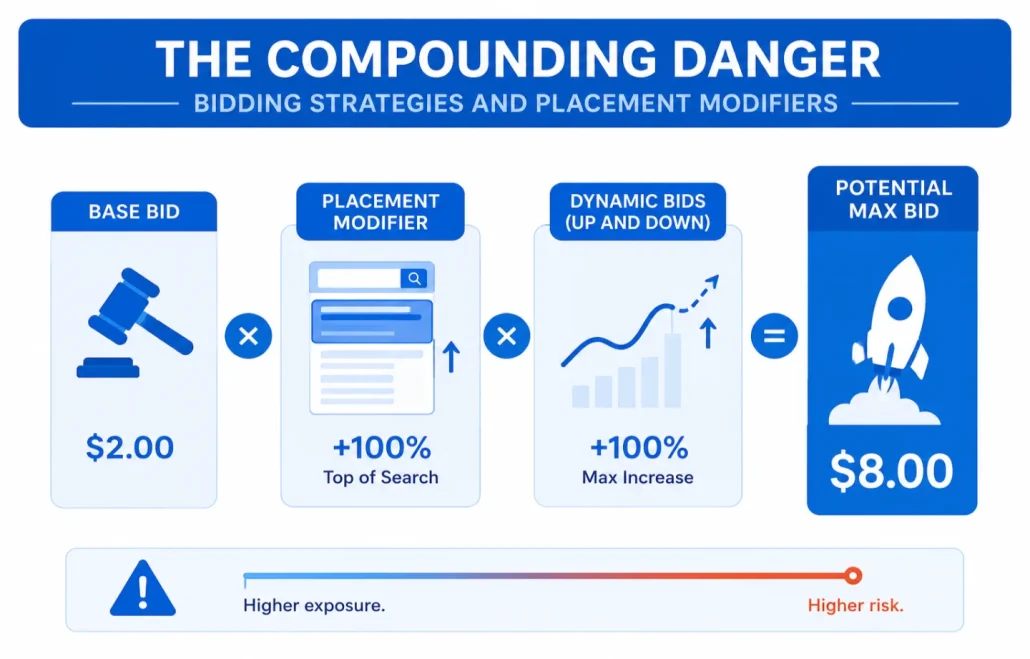
The bidding option is only half the story. Placement Modifiers can push the real bid much higher than the number you typed into the campaign. Depending on the placement, Amazon allows modifiers up to 900%, although most sellers use much smaller adjustments.
Suppose your base bid is $2 and you add a 100% Top of Search modifier. If Dynamic Bids – Up and Down is also active, the two settings can compound and push your potential bid much higher than the amount you originally entered. Amazon does not publicly explain the exact sequencing of these adjustments, so the safest takeaway is that aggressive placement modifiers and dynamic increases can create far more exposure than the base bid suggests.
For a $20 product, even one heavily inflated click can erase a large part of the margin. A few clicks at that level can quickly damage the economics of the campaign.
This is why it is better to change one major variable at a time. If you want to use a strong placement modifier, Down Only is usually the safer partner. You can still compete for premium placement, but Amazon keeps the ability to reduce the bid when the traffic looks weak.
Used carefully, paid traffic can support the Amazon flywheel by creating sales, reviews, stronger rankings, and more organic visibility. Used carelessly, the campaign can burn through the budget before any of that momentum appears.
The Strategic Playbook: When to Use Which Strategy
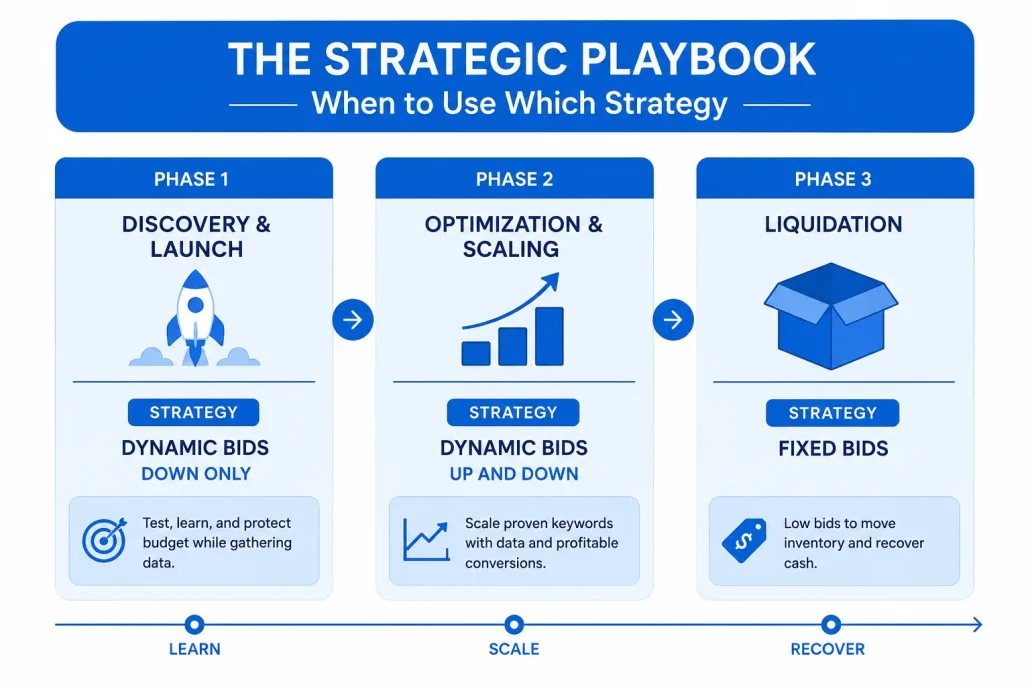
Amazon bidding is not something you set once and forget. The right strategy depends on where the product is in its lifecycle, how much data the campaign has collected, and what you are trying to achieve at that moment.
A campaign that is only a few days old should not be managed the same way as one that has been profitable for several months. As the product matures, your bidding strategy should change with it.
Phase 1: The Discovery and Launch Phase
At launch, you are working with very little information. The product has no meaningful advertising history, and you do not yet know which keywords will attract clicks, drive conversions, or waste money. Before the campaign goes live, Amazon Product Research Tools can help you validate demand, compare competing products, and build a stronger starting keyword list.
Dynamic Bids – Down Only is usually the safest place to begin. It allows Amazon to reduce your bid when a shopper appears unlikely to convert, but it does not give the platform permission to raise the bid above the amount you entered.
Winning every auction is not the goal during this phase. You are paying to learn which search terms deserve more investment while keeping enough control over the budget to survive the testing period.
Phase 2: The Optimization and Scaling Phase
After 30 to 45 days, the search term report should begin showing clear patterns. Certain keywords will generate repeated sales, while others may collect clicks without producing a meaningful return.
RANK LIKE THE PROS
Discover a better way to rank products from external traffic, like Facebook, Google and TikTok, with LandingCube promo pages.
Try it free for 21 days.
The strongest terms can be moved into a separate Exact Match campaign. This gives you more control over their bids and makes it easier to measure whether the campaign remains profitable as spending increases.
Once a keyword has produced enough consistent sales, Dynamic Bids – Up and Down may become worth testing. At that point, Amazon is no longer working with a complete guess. It has a record of how the keyword performs and can bid more aggressively when the shopper appears likely to convert.
This is also where Amazon PPC Tools and Amazon Analytics Tools can save time. They can help identify winning search terms, monitor changes in ACoS, and show whether higher bids are actually creating profitable growth.
Phase 3: The Liquidation Phase
Not every product becomes a winner. Demand may fall, a competitor may lower its price, or the listing may never gain enough traction to justify keeping hundreds of units in storage.
When the goal changes from profit to inventory recovery, Fixed Bids can be useful. A seller might set the bid at $0.20 or $0.30 and refuse to let Amazon adjust it.
You will lose most auctions at that level, but that is not necessarily a problem. The campaign may still pick up inexpensive placements near the bottom of the page and slowly move inventory without creating another large advertising loss.
For sellers researching how to increase sales on Amazon during a slow period, liquidation should be treated as a recovery strategy rather than a growth strategy. The objective is to free up cash and warehouse space for a stronger product opportunity.
Moving Forward with Confidence
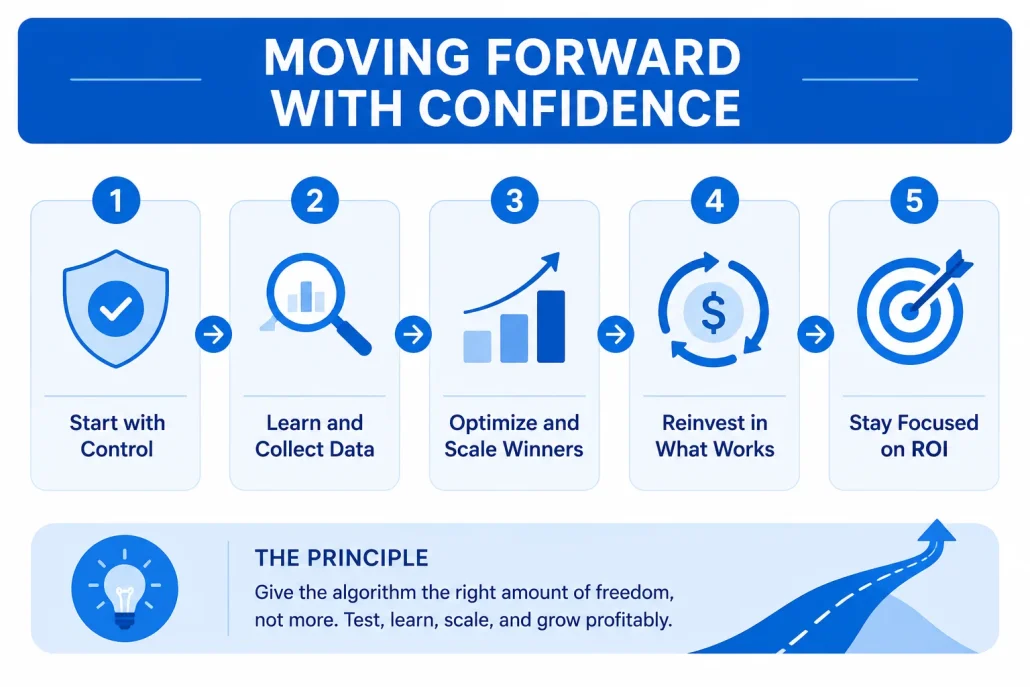
The Amazon Advertising console looks simple on the surface, but every setting affects the amount of control Amazon has over your money. New sellers are competing against agencies and established brands with years of performance data, so trying to outspend them is rarely realistic.
What you can control is how much freedom you give the algorithm. Starting with Dynamic Bids – Down Only helps protect the budget while the campaign collects enough data to support more aggressive decisions later.
Do not assume Amazon’s default option is automatically the right one. Check the bidding strategy, understand how placement modifiers affect the real maximum bid, and change one major variable at a time.
Bidding is only one part of the traffic strategy. Sellers using short-form content should also understand How to promote Amazon Products on TikTok without attracting low-intent visitors who click but never purchase.
Learning how to build a brand on Amazon also means protecting your advertising budget while making smarter decisions as your campaigns grow. Strong growth usually comes from controlled testing, careful scaling, and knowing when a campaign has earned the right to bid more aggressively. Some sellers use ChatGPT for Amazon Sellers to organize keyword ideas, review campaign data, and brainstorm testing strategies before making major bidding changes.
When reviewing results from different traffic sources, keep the metrics separate. An Amazon affiliate conversion rate measures affiliate traffic, while your advertising reports measures the performance of paid Amazon campaigns.
FAQ: The difference between Amazon Dynamic Ads and Fixed Bids
Amazon has changed the preselected bidding option more than once, and the setting may vary as the Advertising Console is updated. Because of that, you should not assume the default choice is the safest or most appropriate option for your campaign.
Always review the bidding strategy before launching. The right setting depends on your budget, product history, campaign goals, and tolerance for risk.
Yes. Open the campaign in the Advertising Console, go to the campaign settings, and choose the new bidding option.
The change normally begins affecting future auctions quickly. It is still worth recording the date so you can compare performance before and after the adjustment.
No. Down Only does not automatically stop your ads from showing.
Amazon may submit your full bid when the shopper appears relevant. It only lowers the amount when its system expects a weaker chance of conversion.
Your base bid may not be the final amount used in the auction. Dynamic Bids – Up and Down can raise it, while placement modifiers can increase it before Amazon calculates another adjustment.
Check both settings when the CPC looks unexpectedly high. The combined effect is often the reason the actual cost exceeds the number entered at keyword level.
Usually not. Automatic campaigns can match your product with a broad range of search terms, including terms that are only loosely relevant.
Fixed Bids force Amazon to use the same amount even when the traffic appears weak. Down Only is generally safer because it allows the platform to reduce the bid on lower-quality searches.
The Dynamic vs. Fixed Bid options discussed here are mainly associated with Sponsored Products. Sponsored Brands and Sponsored Display use their own optimization settings and campaign goals.
The exact controls differ, but the broader lesson remains the same. Always understand what Amazon is allowed to adjust before giving the campaign a large budget.
There is no single number that guarantees a campaign is ready. A common starting point is 30 to 45 days, but the quality of the data matters more than the calendar.
Look for keywords that have generated repeated, profitable sales. If a term has produced roughly 15 to 20 conversions at an acceptable ACoS, you have a stronger reason to test a more aggressive strategy.
No. Amazon can raise a bid up to 100% for top-of-search placements and by up to 50% for some other placements, but it does not apply the maximum increase to every auction.
The adjustment may be small or large depending on the shopper, placement, and conversion signals available at that moment.
Yes. This combination can be useful when you want stronger top-of-search visibility without giving Amazon unlimited freedom to raise the bid.
The placement modifier can increase the amount for premium inventory, while Down Only still allows Amazon to reduce it when the shopper appears unlikely to purchase.
No. Suggested bids are based on recent auction activity for the keyword. They do not calculate the effect of your campaign bidding strategy or placement modifiers.
You need to work out the maximum exposure yourself. Otherwise, a bid that looks reasonable inside the console may become far more expensive once the other settings are applied.
RANK LIKE THE PROS
Discover a better way to rank products from external traffic, like Facebook, Google and TikTok, with LandingCube promo pages.
Try it free for 21 days.